It’s been tricky to make much progress these last couple weeks – having a (non-gaming) coding job and being able to come home and work gets tricky, so a large majority of my game coding time is weekend time. Also, couple some deadlines at work, and you’ve got a large case of “I don’t want to code when I hit home.”
However: I did make a good deal of progress these last few weeks.
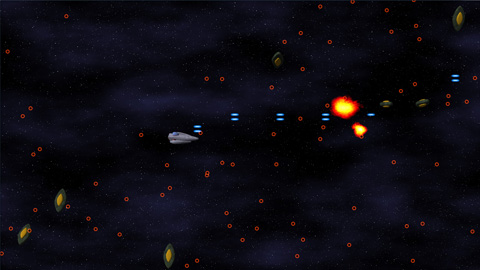
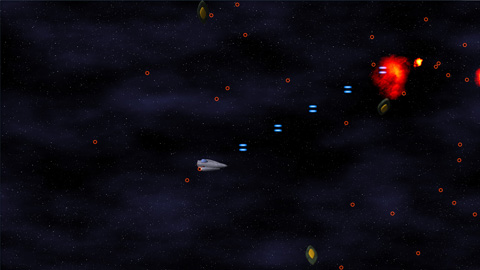
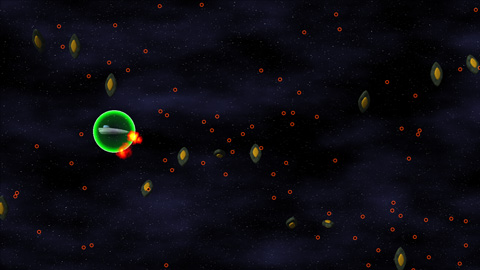
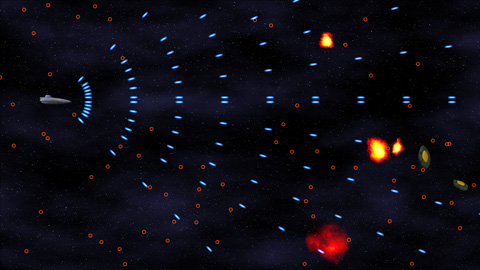
If you look at the screenshot in my last entry, it should be plain exactly HOW MUCH. Suddenly, my little experiment looks considerably like a GAME.
I haven’t had nearly as much time to get stuff done at home as I’d like, as work has been a bit of a scramble recently. Working ridiculously hard at a code-related day job and then coming home and trying to code is…difficult. And recently, highly unsuccessful.
However, this last weekend I was able to get a few things done.
Silos Are Not Just For Grain and Missiles
First up, I decided to check out Nevercenter Silo, a 3D modeling program that I swear has to be the easiest-to-use modeling software I have ever SEEN. For some reason, this software just completely clicks with me.
Maybe it’s that it allows me to start with something as simple as a box and push/pull/extrude/warp/etc it slowly into the shape that I want, or maybe it’s that it has built-in support for symmetrical modeling (you basically model HALF of a model and the other half changes shape along with it). It’s hard to say. However, it feels more like sitting down with clay and slowly morphing it into the shape that I want vs. the usually-cumbersome task of modeling a 3D mesh.
It’s done! Finally, after over a year since its completion, Mop of Destiny gets its own webpage!
I had a really difficult time trying to figure out what the webpage should even look like, so I just kept putting it off, until last night when I was almost asleep, I had that “eureka!” moment immediately before dozing off. Luckily, I remembered my idea in the morning!
Also DrilNES 1.10 is released. I fixed up a few very minor emulation issues, added support for all of the 6502’s “undocumented” opcodes (i.e. the opcodes that just happen to work even though they’re really not supposed to), and modified the display a bit.
Now you can even make it look like a crappy old TV, if you choose! For, uh..nostalgia’s sake.
Enjoy!
HERE COMES A NEW CHALLENGER!
Inspired by Scet’s Tub of Awesome, I opted to continue work on my old emulator, DrilNES.
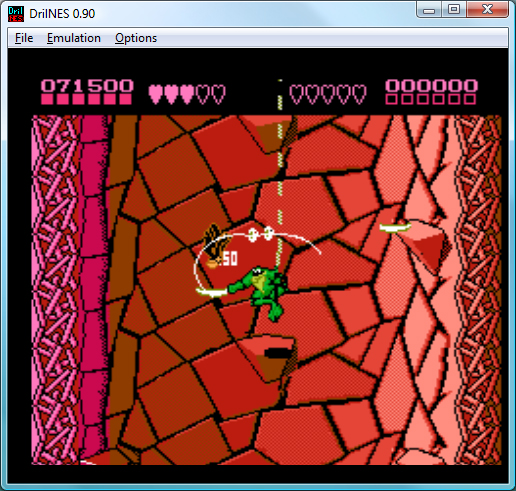
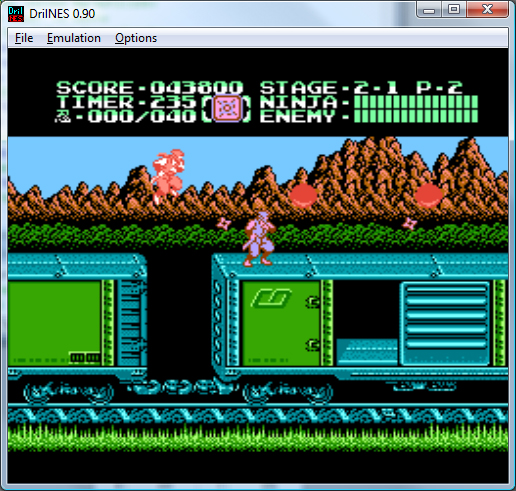
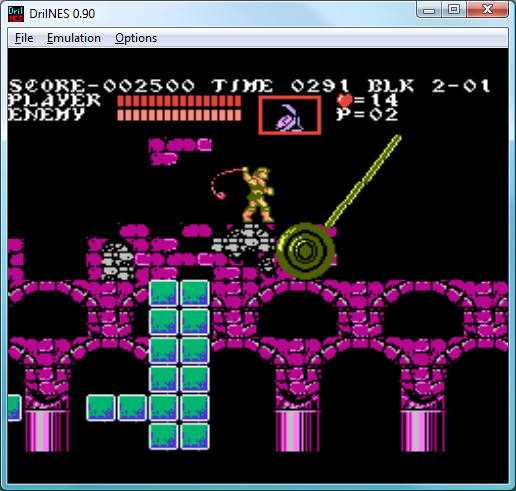
And here it is! DrilNES in all its glory! Note that it does not support PAL NES timing, it only runs NTSC games (so US and Japanese games only).
A Brief History of the World
I first attempted to tackle NES emulation back in 1999. I had the goal of getting three games to be playable: Castlevania 3, Startropics, and Crystalis. Turns out, these three games are some of the harder games to emulate, due to the tricky nature of the cartridge hardware that they run on. However well it ran at the time, it was woefully inaccurate, and this bothered me. In mid-2004, I apparently decided to try again.
No real dev updates. I’m still working on the behind-the scenes stuff. I got a bit bogged down with the asset management – turns out, handling on-the-fly asset streaming on the 360 using XNA is a tricky proposition, due to the garbage collection (which triggers every megabyte or so of allocation, grinding everything to a halt if your heap is too complex) and the XNA content management system (you can’t dynamically unload any given individual component – it’s all or nothing).
Because it’s been rather frustrating, I didn’t feel like coding tonight.
Instead, I did some image editing based on a dumb idea I had.

Click to enlarge
That’s all.
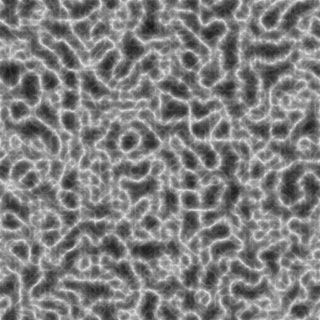
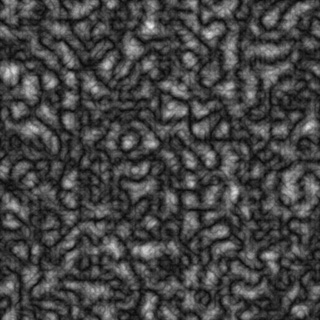
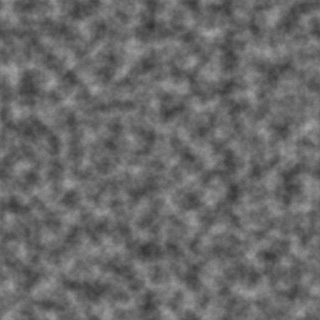
I’ve gotten less done recently that I would have liked, due to a lack of time to sit down at my computer. However, I did implement tiling perlin noise in-shader.
It uses the same basic technique as I used to set up the tiling noise (so you can read it in one of my earlier posts).
Basically, I can generate perlin noise that tiles at any given (integer) position.
Quite handy for generating tiling textures (because not everything I’m generating needs to be 3d)
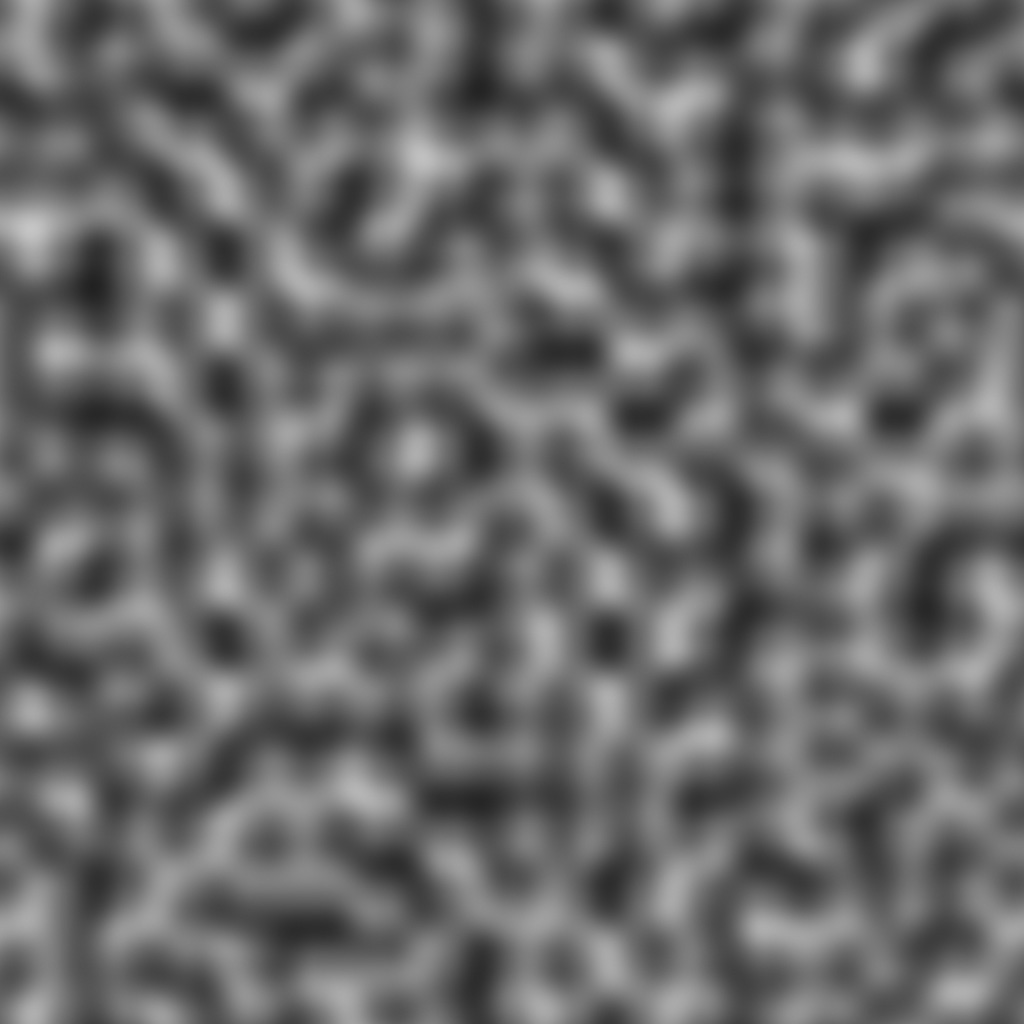
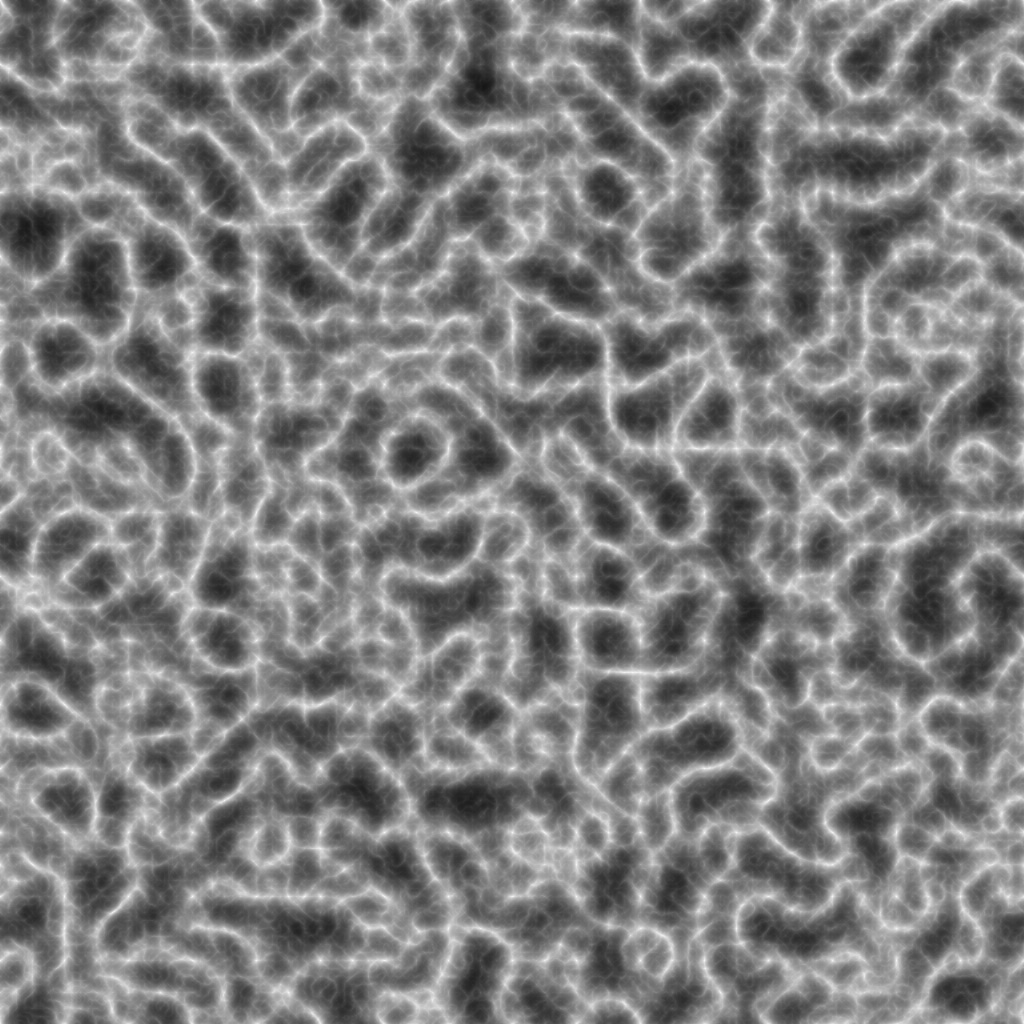
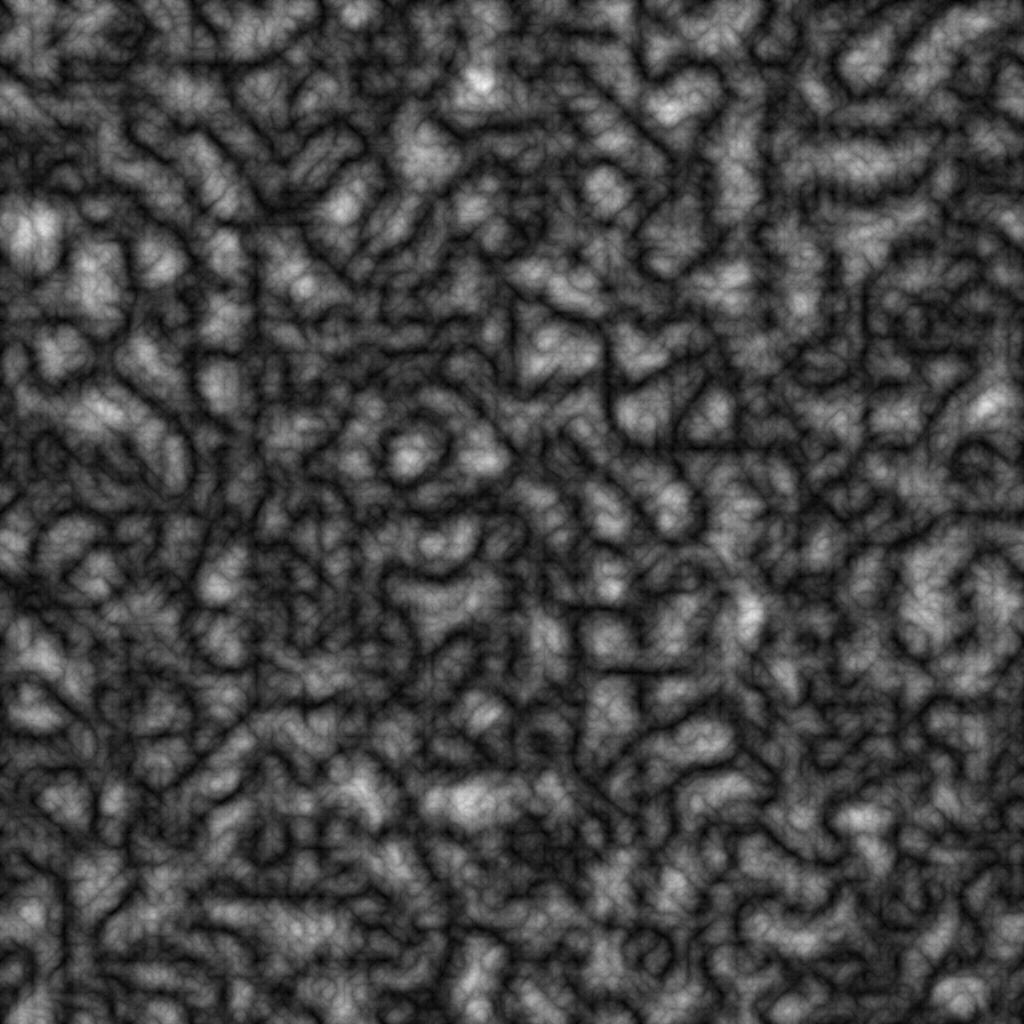
Here are some examples. It’s hard to tell that they tile without actually tiling them yourself, but they do. So there.
Click to enlarge
So I used it to put together a seamless version of my earlier brick texture:

Click to enlarge
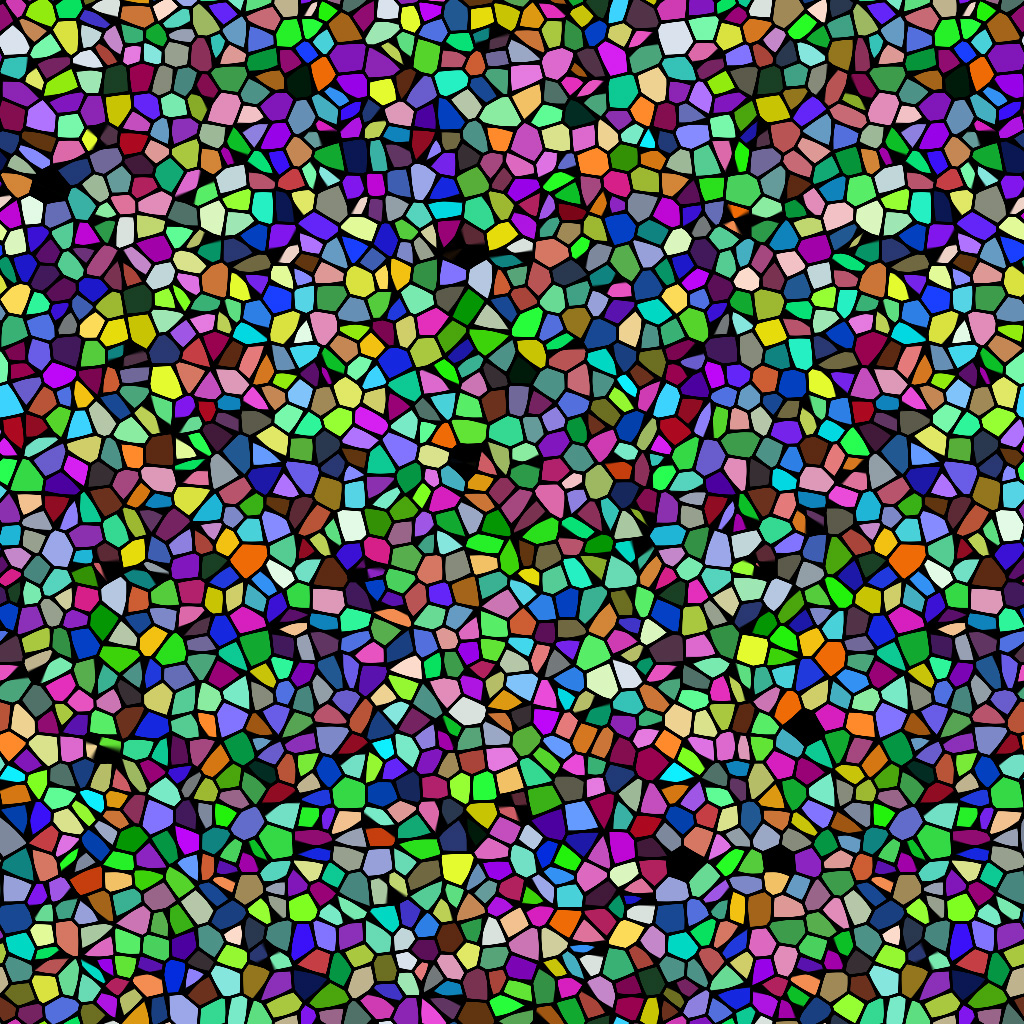
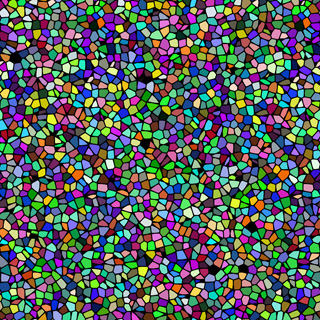
Finally, I did the same basic trick with the Worley (cellular) noise.
The first screenshot is a large area repeating Worley, the second repeats at a very small level so it should be obvious how it tiles, even looking at the thumbnail:

Click to enlarge
Next up: Maybe I should actually do something useful with these things.